
The Real Reason Why We Don't Explore Ocean—And Why Space Gets All the Attention
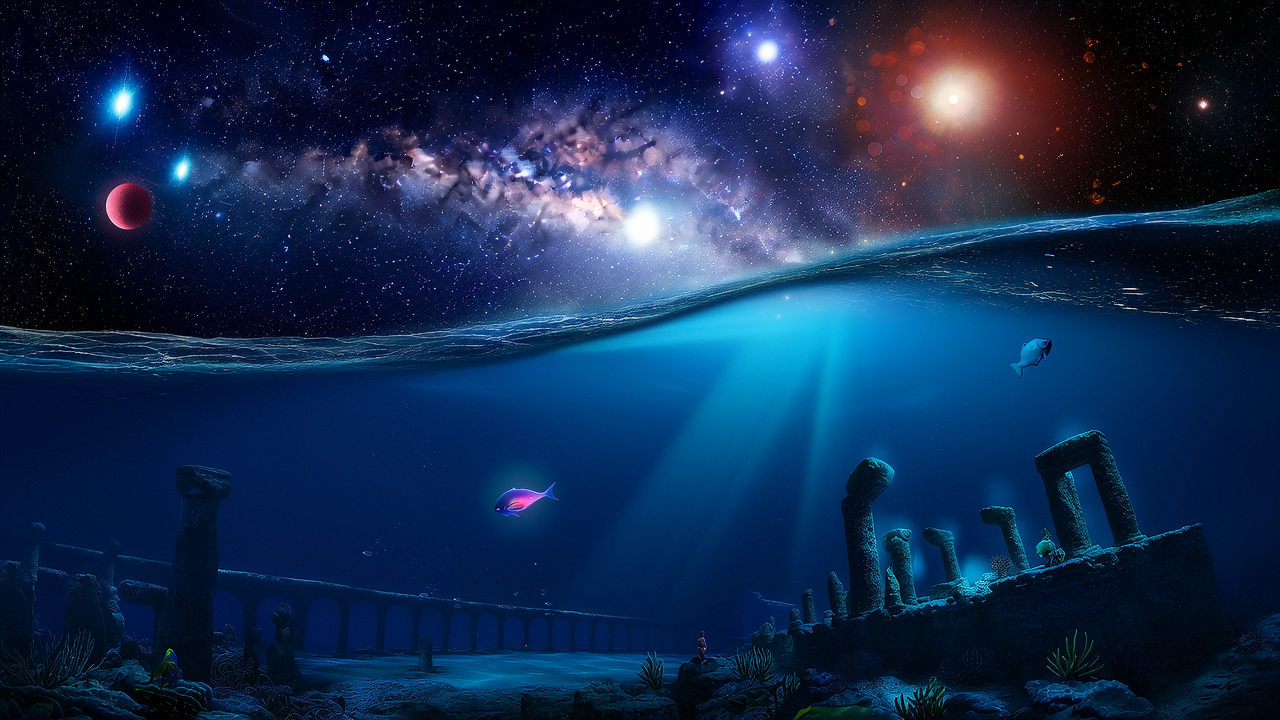
The Great Unexplored: Our Ocean Paradox
Covering 71% of Earth’s surface, oceans form the backbone of our planet’s ecosystem. These vast blue expanses harbor incredible biological diversity, provide food for billions of people worldwide, and generate most of Earth’s oxygen through microscopic plankton. Yet remarkably, we’ve mapped less than 5% of the ocean floor in detail—a startling fact when contrasted with our extensive knowledge of distant celestial bodies.
Why does this profound disconnect exist? How can we know more about the surface of Mars than about the depths that cover our own planet? The answer lies at the intersection of psychology, economics, and technology—revealing surprising insights about human nature and our relationship with the unknown.
Technological Hurdles: The Challenge of Ocean Exploration
Human attempts to explore underwater environments date back centuries. Modern submarines emerged in the mid-19th century, initially for exploration and later adapted for military applications during conflicts like the American Civil War. By the 1960s, the pioneering work of Jacques Cousteau had already demonstrated that humans could establish habitats beneath the waves through his groundbreaking Conshelf II project.
Despite these achievements, ocean exploration faces formidable technological challenges:
- Extreme pressure conditions: Pressure increases by approximately one atmosphere for every 10 meters of depth—creating engineering challenges that far exceed those of space exploration
- Near-freezing temperatures: Deep ocean environments approach freezing points, requiring sophisticated thermal management systems
- Complete darkness: Below 1,000 meters, sunlight disappears entirely, necessitating advanced imaging technologies
- Highly corrosive environment: Saltwater rapidly degrades equipment, dramatically increasing maintenance requirements and operational costs
These factors make deep-sea exploration vessels extraordinarily complex and expensive. While we possess the necessary knowledge to overcome these obstacles, the sheer cost of building machines that can withstand such hostile conditions has limited our underwater ventures.

The Psychological Barrier: Why Oceans Terrify Us
Perhaps the most significant—yet least discussed—obstacle to ocean exploration is psychological. Thalassophobia, the fear of deep water, affects a surprisingly large segment of the population. Unlike many phobias considered irrational, this fear carries evolutionary wisdom; drowning claims hundreds of thousands of lives annually, making deep water a legitimate threat to human survival.
This primal fear manifests throughout human culture:
- Ancient mythology: Stories like Atlantis reflect our ancestral understanding of the sea’s destructive potential
- Maritime legends: The Bermuda Triangle exemplifies our continued fascination with and fear of oceanic mysteries
- Historical disasters: The sinking of the Titanic, which claimed approximately 1,500 lives, reinforced our collective anxiety about the ocean’s deadly power
The psychological impact can’t be overstated. The ocean represents the ultimate unknown—vast, dark, and filled with alien life forms. Our inability to breathe underwater and our vulnerability in marine environments trigger deep-seated survival instincts that make us inherently uncomfortable with oceanic exploration.
“The sea, once it casts its spell, holds one in its net of wonder forever.” — Jacques Cousteau
Despite this poetic sentiment from one of history’s greatest ocean explorers, most humans maintain a respectful distance from the depths.
Space vs. Ocean: A Tale of Two Frontiers
Why does space exploration capture public imagination and funding while ocean exploration remains relatively neglected? This disparity reveals fascinating insights about human priorities and perceptions:
The Space Advantage: Why We Look Up, Not Down
- Visibility and accessibility:
- Space is observable from Earth through telescopes
- Astronomical discoveries can be made without leaving the ground
- Results are immediately shareable through imagery
- Political and nationalist appeal:
- Space achievements generate national prestige
- The Space Race defined a generation during Cold War competition
- First achievements (orbit, moon landing) create lasting historical legacies
- Commercial potential:
- Satellite technology generates billions in revenue
- Asteroid mining promises access to rare minerals
- Space tourism creates new market opportunities
- Military applications receive substantial government investment
- Cultural mythology:
- Space represents the “final frontier” in popular culture
- Science fiction has romanticized space exploration for generations
- Astronauts enjoy celebrity status rarely afforded to oceanographers
The Ocean Disadvantage: Hidden Barriers to Exploration
- Limited visibility and accessibility:
- Ocean depths remain invisible from the surface
- Exploration requires physically entering hostile environments
- Results are difficult to observe and share with the public
- Minimal political incentive:
- Few “firsts” remain to claim in ocean exploration
- Boundary disputes create international complications
- Discoveries rarely generate headline-making excitement
- Environmental concerns:
- Resource extraction raises ecological objections
- Conservation efforts limit exploration activities
- Damage to fragile ecosystems creates ethical dilemmas
- Psychological barriers:
- Deep water triggers primal human fears
- Marine disasters leave lasting cultural impressions
- Underwater environments feel alien and threatening
This comparison illustrates why space continues to receive disproportionate attention and funding. NASA’s annual budget typically exceeds that of the National Oceanic and Atmospheric Administration (NOAA) by several billion dollars—despite the direct relevance of ocean research to climate science, food security, and biodiversity conservation.
The Economic Reality: Following the Money
The ultimate limitation on ocean exploration comes down to economics. Deep-sea research faces a challenging cost-benefit equation:
- Extreme equipment expenses: Building vehicles capable of withstanding deep-sea conditions requires specialized materials and engineering
- High operational costs: Each expedition requires substantial support infrastructure and personnel
- Limited commercial applications: Few immediately profitable ventures exist beyond controversial resource extraction
- Maintenance challenges: Saltwater rapidly degrades equipment, creating ongoing expenses
Government organizations and academic institutions pursue ocean research, but their combined budgets pale in comparison to space agencies and aerospace corporations. Without clear financial incentives or the national prestige associated with space exploration, ocean research remains chronically underfunded.
The Cosmic Irony: Why Space May Lead Us Back to the Ocean
Perhaps the most fascinating aspect of this exploration imbalance is that our search for extraterrestrial life may ultimately lead us back to Earth’s oceans. The most promising candidates for harboring alien life in our solar system—Jupiter’s moon Europa and Saturn’s moon Enceladus—feature vast subsurface oceans beneath their icy crusts.
The technologies developed to explore these distant water worlds will inevitably advance our ability to explore Earth’s oceans as well. This convergence creates a surprising synergy between space and ocean exploration, suggesting that the two fields may eventually become more closely aligned.
Bridging the Gap: The Future of Ocean Exploration
Despite these challenges, oceanic exploration remains vital to humanity’s future. The sea holds potential solutions to numerous pressing challenges:
- Climate research: Oceans play a crucial role in regulating global temperatures and carbon cycles
- Biodiversity discovery: Marine environments may contain millions of undiscovered species
- Medical breakthroughs: Deep-sea organisms often produce unique compounds with pharmaceutical applications
- Sustainable food sources: Better understanding of marine ecosystems could improve fishery management
- Energy innovation: From tidal power to thermal energy conversion, oceans offer renewable energy potential
As President Kennedy noted when committing America to the Moon: “We choose to go to the Moon not because it is easy, but because it is hard.” This same spirit of exploration and discovery must be applied to ocean exploration if we hope to unlock its secrets.
Taking Action: How to Support Ocean Exploration
Interested in helping bridge the gap between space and ocean exploration? Consider these actionable steps:
- Support organizations dedicated to ocean research and conservation
- Advocate for increased funding for oceanic research at local and national levels
- Participate in citizen science projects related to marine environments
- Reduce your impact on ocean ecosystems through sustainable consumption choices
- Educate yourself and others about the importance of ocean exploration
Conclusion: Confronting Our Final Frontier
The real reason we don’t explore the oceans isn’t merely technological limitation or economic calculation—it’s a complex interplay of human psychology, cultural narratives, and resource allocation. Our tendency to look toward the stars rather than beneath the waves reflects deep-seated aspects of human nature and societal priorities.
Yet the future of ocean exploration holds tremendous promise. As technology advances and our understanding of the ocean’s importance grows, we may finally begin to unlock the secrets of our planet’s last true frontier. The question isn’t whether we can explore the oceans—it’s whether we will summon the courage, commitment, and curiosity to venture into the deep.
Are we ready to confront the abyss? Our planet’s future may depend on it.