The REAL Reason Xbox Is Failing: A Deep Dive Into Microsoft's Gaming Decline
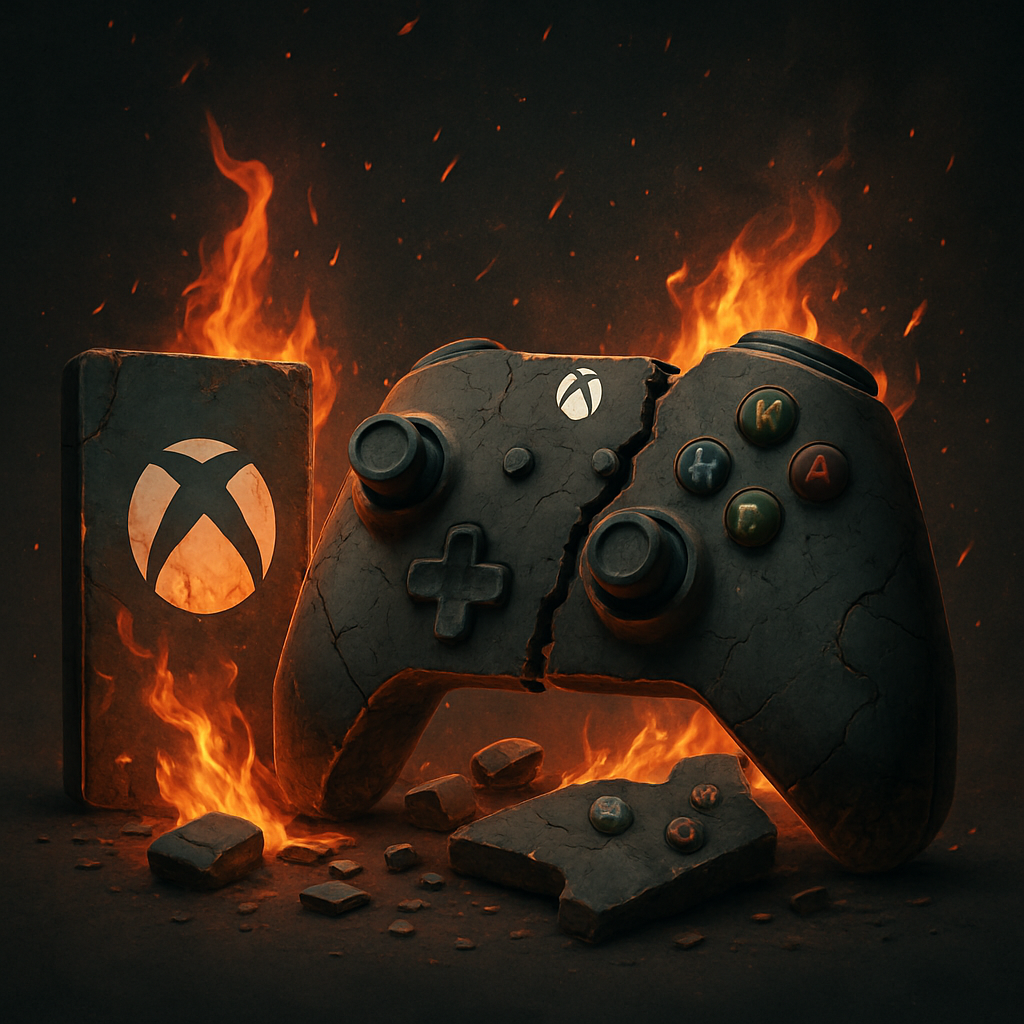
Xbox has seen a dramatic decline in console sales and market share over recent years.
The Fall of a Gaming Giant
Remember when Xbox was poised to dominate the gaming industry? Back in 2005, teenagers worldwide begged their parents for the revolutionary Xbox 360, with franchises like Halo catapulting Microsoft to the forefront of console gaming. Fast forward to today, and Xbox’s position looks remarkably different.
In 2024, Xbox recorded its lowest U.S. console sales ever, moving a mere 2.7 million units with hardware revenue plummeting 42% compared to the previous year. How did one of gaming’s most iconic brands fall so dramatically from grace? Let’s examine the critical factors behind Xbox’s ongoing decline.
The Game Development Crisis: Why Studios Are Abandoning Xbox
Technical Limitations Creating Developer Frustration
One of the most significant issues plaguing Xbox is the growing reluctance of game developers to release titles for the platform. This problem stems partly from the Xbox Series S, which has created inconsistent support for third-party developers who frequently encounter technical problems getting their games to work on the system.
When Microsoft launched both the Xbox Series S and the more powerful Series X simultaneously in November 2020, they created a technical dilemma that continues to haunt them. By requiring games to function equally well on both systems through their controversial “parity clause,” Microsoft inadvertently created significant barriers for developers.
Why does the parity clause matter? It requires that if developers want to release games for the Series X, they must ensure their games run identically, with the same features, on the cheaper and less powerful Series S. This technical constraint has proven insurmountable for some developers.
Consider Baldur’s Gate 3, one of 2023’s most anticipated games. Larian Studios explained the delayed Xbox release by stating:
“We’ve been developing the Xbox version of Baldur’s Gate 3 for some time now. We encountered a few technical issues in the development of the Xbox version that prevented us from feeling 100% confident in announcing it… we were unable to get split-screen co-op to the same standards on both Xbox Series X and S, which is a requirement for us to be able to release it.”
While Baldur’s Gate 3 eventually made its way to Xbox in December 2023, it arrived more than three months after its PlayStation release. By then, most of the initial hype had faded, and many players had already moved on or purchased the game on PlayStation.
This pattern of delayed or entirely skipped releases (like Black Myth: Wukong) continues to push gamers toward PlayStation, creating a downward spiral for Xbox’s market position.
The Exclusivity Problem: Where Are Xbox’s System Sellers?
Another critical factor in Xbox’s decline is the baffling lack of exclusive titles. Exclusive games are system sellers—they give consumers a compelling reason to choose one console over another. Yet Microsoft seems to have abandoned this fundamental principle of console competition.
PlayStation has leveraged exclusives masterfully with titles like God of War, The Last of Us, and Spider-Man 2—forcing anyone who wants to play these acclaimed games to purchase their hardware. Nintendo follows a similar strategy with franchises like Mario, Zelda, and Pokémon.
Meanwhile, Xbox’s exclusive lineup has dwindled to nearly nothing. Even more perplexing, Microsoft now frequently releases its “exclusive” titles on PlayStation shortly after their Xbox debut:
- Indiana Jones and the Great Circle: Coming to Xbox in December 2024, then to PlayStation in Spring 2025
- DOOM: The Dark Ages: Releasing simultaneously on PlayStation and Xbox (May 15, 2025)
This strategy raises serious questions about Microsoft’s commitment to its own console. Why would consumers invest in Xbox hardware when they can access most of its library on PlayStation while also enjoying PlayStation’s robust exclusive lineup?
The numbers tell a stark story: The Xbox 360 sold 14.9 million units worldwide in its bestselling year (2011). In comparison, the Xbox Series S and X combined have sold just 8.65 million units in their bestselling year (2022). This decline comes despite the gaming market more than doubling in revenue—from $74 billion in 2011 to $183 billion in 2022.
Leadership Problems: Microsoft’s Shifting Focus
Under Phil Spencer’s leadership as “Head of Xbox” since 2014, the company has pivoted away from traditional console gaming toward building “multimedia ecosystems.” While GamePass Ultimate stands as Spencer’s one clear achievement—allowing customers to access hundreds of games via subscription—other decisions have proven far less successful.
Microsoft CEO Satya Nadella revealed the company’s shifting priorities when questioned by shareholders about Xbox’s performance: “The focus is on PC gaming and cloud technology should carry the video game business to everyone.”
Similarly, Microsoft CFO Amy Hood discussed only Game Pass, subscriptions, and microtransactions—with no mention of console hardware or exclusive game development.
This strategic pivot creates a fundamental disconnect with consumers who still associate Xbox primarily with console gaming. As gaming analyst Derek Strickland noted: “Microsoft Gaming is doing everything it can to position Xbox as an ecosystem, but the public still associates it with consoles.”
The Human Cost: Layoffs and Trust Erosion
Adding to Xbox’s troubles, Spencer has overseen significant workforce reductions—cutting 800 jobs in 2023 and another 650 in 2024. Each round of layoffs was accompanied by corporate messaging about creating a “sustainable cost structure,” further alienating both employees and the gaming community.
Legacy Issues: How the Xbox One Poisoned the Well
Xbox’s current struggles didn’t emerge overnight. Many can be traced back to the disastrous Xbox One launch, which alienated a generation of gamers and drove them toward PlayStation.
The Xbox One’s launch in 2013 became notorious for several consumer-hostile policies:
- Required always-online connectivity
- Restrictions on game sharing and used game sales
- Forced bundling with the unwanted Kinect sensor (adding $100 to the price)
- Excessive focus on non-gaming multimedia features
These missteps were magnified by launching just one week after the PlayStation 4, which was both cheaper ($399 vs. $499) and more performance-focused. Sony brilliantly capitalized on Microsoft’s errors with a viral ad showing the simplicity of sharing PlayStation games—just hand the disc to another person—mocking Xbox’s complicated restrictions.
This catastrophic launch drove millions of gamers to PlayStation, where they’ve since built extensive game libraries and online communities, making them unlikely to return to the Xbox ecosystem.
Missed Opportunities: The Genshin Impact Blunder
Perhaps the most telling example of Microsoft’s disconnect from gaming trends was their 2020 decision to pass on Genshin Impact. Shanghai-based MiHoYo approached Microsoft first with their free-to-play RPG featuring in-app purchases. Microsoft declined.
By 2022, MiHoYo was posting better profit margins than industry giants EA and Activision, with Genshin Impact alone amassing 66 million players by August 2023. The game launched on PC, iOS, Android, and PlayStation—but not Xbox until November 2024, more than four years after its initial release.
This monumental misread of market trends exemplifies Microsoft’s broader failure to understand what gamers want and where the industry is heading.
Is There Hope? Game Pass as a Silver Lining
The one bright spot in Xbox’s strategy is Game Pass, which has attracted 34 million subscribers as of February 2024. For $10-$20 monthly, subscribers access hundreds of games that would typically cost $70 each, providing exceptional value for consumers.
However, Game Pass presents challenges for developers and Microsoft alike:
- Microsoft’s own internal analysis shows a significant decline in base game sales twelve months after their addition to Game Pass
- Larger developers often withhold their most anticipated titles, reducing Game Pass’s overall value proposition
- The subscription model potentially devalues games in consumers’ perception
What Must Xbox Do to Survive?
For Xbox to regain relevance in the console market, Microsoft needs to fundamentally rethink its approach:
- Abandon the parity clause – Allow developers to maximize the potential of the Series X without being constrained by Series S limitations
- Invest in true exclusives – Create compelling first-party titles that give consumers genuine reasons to choose Xbox
- Reconnect with core gamers – Focus on gaming experiences first, ecosystem expansion second
- Learn from competitors – Study the successful strategies employed by PlayStation and Nintendo
- Embrace industry trends – Ensure faster adoption of emerging game types and business models
The Bottom Line: Can Xbox Recover?
Xbox stands at a critical crossroads. While Game Pass shows promise as a subscription service, Microsoft’s confused strategy and apparent disinterest in traditional console gaming threatens the brand’s very existence in the hardware space.
Unless Microsoft recommits to what made Xbox successful in the first place—compelling exclusive games, developer-friendly hardware, and a laser focus on core gamers—its decline seems likely to continue. The gaming community is watching closely to see if Xbox can rediscover its identity before it’s too late.
Ready to dive deeper into the gaming industry? Check out our analysis of Why PlayStation Continues to Dominate Console Sales and How Nintendo Maintains Its Unique Market Position.
What do you think about Xbox’s current strategy? Should Microsoft double down on hardware or pivot entirely to software and services? Share your thoughts in the comments below!